EDUCATION REMAINS A PILLAR OF THE TINUBU ADMINISTRATION – FEMI GBAJABIAMILA
February 27, 2026




February 5, 2026 on Latest News, Press Releases
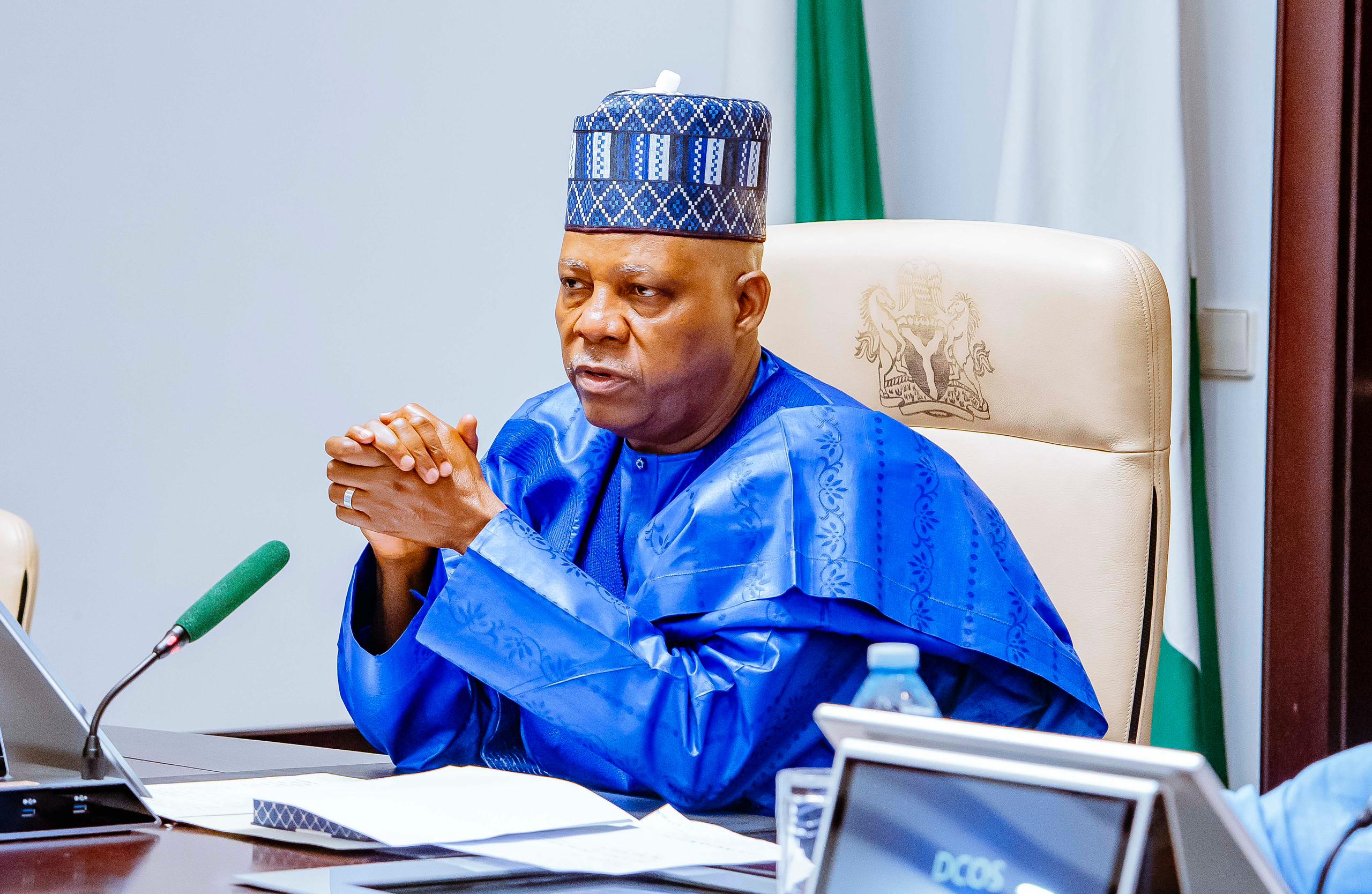
President Bola Ahmed Tinubu, GCFR, represented by Vice President, Senator Kashim Shettima, has launched Nigeria’s National Halal Economy Strategy aimed at positioning the country to tap into the $7.7 trillion global halal market and diversify its economy.
He described the unveiling of the strategy as a signal of Nigeria’s readiness to join the world in grabbing a huge chunk of the global halal economy already embraced by leading nations, as well as to clearly define the nation’s direction within the market expected to add an estimated $1.5 billion to the nation’s GDP by 2027.
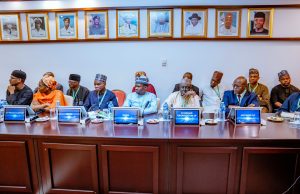
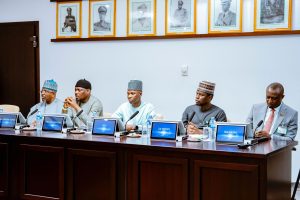
Speaking on Thursday when he unveiled the Nigeria National Halal Economy Strategy at Presidential Villa, Abuja, Senator Shettima called for disciplined, inclusive, and measurable action for the strategy to deliver jobs, and shared prosperity across the country.
“It is with this sense of responsibility that I formally unveil the Nigeria National Halal Economy Strategy. This document is a declaration of our promise to meet global standards with Nigerian capacity and to convert opportunity into lasting economic value.
“What follows must be action that is disciplined, inclusive, and measurable, so that this Strategy delivers jobs, exports, and shared prosperity across our nation,” he stated.
“It is going to be chaired by the supremely competent Minister of Industry, Trade and Investment,” the Vice President added.
The Vice President outlined what he described as clear and measurable ambitions set by the Strategy, including”expanding halal-compliant food exports, developing pharmaceutical and cosmetic value chains, positioning Nigeria as a halal-friendly tourism destination, and mobilising ethical finance at scale,” by 2030.
The cumulative efforts, according to him, “are projected to unlock over twelve billion dollars in economic value, while strengthening food security, deepening industrial capacity, and creating opportunities for small-and-medium-sized enterprises across our states.”
Allaying concerns by those linking the halal with religious affiliation, VP Shettima pointed out that the global halal economy has since outgrown parochial interpretations.
He said, “It is no longer defined solely by faith, but by trust, through systems that emphasise quality, traceability, safety, and ethical production. These principles resonate far beyond any single community.
“They speak to consumers, investors, and trading partners who increasingly demand certainty in how goods are produced, financed, and delivered. It is within this broader understanding that Nigeria now positions itself.”
Many advanced Western economies, the Vice President noted, have since “recognised the commercial and ethical appeal of the halal economy and have integrated it into their export and quality-assurance systems.”
He listed developed countries, including the United Kingdom, France, Germany, the Netherlands, the United States, Canada, Australia, and New Zealand, saying they are currently among “leading producers, certifiers, and exporters of halal food, pharmaceuticals, cosmetics, and financial products.”
The VP noted that what these developed nations have experienced is a confirmation of a simple truth, that “the halal economy is a global market framework rooted in standards, safety, and consumer trust, not geography or belief.”
He explained that while the Nigeria National Halal Economy Strategy is the result of careful study and sober reflection, it was inspired by the commitment of the administration of President Bola Ahmed Tinubu “to diversify exports, attract foreign direct investment, and create sustainable jobs across the federation.
“It is also the product of deliberate partnership, developed with the Halal Products Development Company, a subsidiary of the Saudi Public Investment Fund, alongside Dar Al Halal Group Nigeria, with technical backing from institutions such as the Islamic Development Bank and the Arab Bank for Economic Development in Africa,” he added.
Recall that President Tinubu’s recent state visit to the Republic of Türkiye further reinforces Nigeria’s commitment to developing a globally competitive halal ecosystem.
A major outcome of that visit was the signing of an Agreement in the Field of Halal Quality Infrastructure between Nigeria and Türkiye, aimed at strengthening standards, accreditation, certification, and quality assurance systems to enhance international acceptance of Nigerian halal products and services.
Commenting on the unveiling, Chairperson of the National Halal Strategy Committee and Minister of Industry, Trade and Investment, Dr. Jumoke Oduwole, said the launch of the Nigeria National Halal Strategy by the Vice President is a public-private collaboration that has involved extensive interaction with stakeholders.
She noted that the private sector led the charge in ensuring that it is a whole-of-government and whole-of-country intervention, with the Office of the Vice President coordinating all ministries, departments, and agencies, while the Federal Ministry of Industry, Trade and Investment played a pivotal role.
The minister stressed that what the Halal Strategy has done for Nigeria “is to position us among countries that export Halal-certified goods across the world.
“We are going to leverage the African Continental Free Trade Area (AfCFTA) to ensure we export our Halal-friendly goods to the rest of Africa and beyond to any willing markets; participation is voluntary,” she added, assuring that as chairperson, her ministry would deliver on the objectives of the strategy for the prosperity of the nation.
Earlier, the Chairman and CEO of Dar Al-Halal Group Nigeria Limited, Alhaji Muhammadu Dikko Ladan, expressed satisfaction that the Halal Product Development Company collaborated with the group in developing the National Halal Economy Strategy.
He added that, in addition to the strategy, an export programme is underway involving the Ministry of Trade and Investment, through which Nigerian companies can be onboarded into the Saudi Arabian market and beyond.
Ladan described the Strategy as a landmark opportunity for Nigeria as it creates market access and attracts foreign direct investment.
The French Ambassador to Nigeria, Marc Fonbaustier, represented by Carole Lebreton, Financial Counsellor at the French Embassy in Nigeria, said the Halal Strategy is also key to Nigeria–France relations, as the French government explores more ways to build socio-economic bridges with Nigeria.
She said the French government stands ready to support Nigeria’s export drive, especially in the areas of food, cosmetics, and pharmaceuticals.
The Nigerian delegation at the unveiling included the CEO of the Nigeria Export Promotion Council, Mrs Nonye Ayeni; Managing Director of the Bank of Industry, Mr Olasupo Olusi, and Special Adviser to the President on Job Creation and MSMEs, Temitola Adekunle Johnson, among others.
Developed by the Halal Products Development Company (HPDC) of the Kingdom of Saudi Arabia — a wholly owned subsidiary of the Saudi Public Investment Fund — the Strategy is an outcome of the bilateral cooperation agreement signed between Nigeria and HPDC in February 2025 at the Makkah Halal Forum.
The collaboration seeks to deepen Nigeria–Saudi Arabia economic relations while leveraging HPDC’s global reach to attract investment, improve market access, and integrate Nigeria into international halal value chains.
Stanley Nkwocha
Senior Special Assistant to The President on Media & Communications
(Office of The Vice President)
5th February, 2026





Big
Default
Small
Nigeria,